Longevity vs. Healthspan: Why “How Long” Matters Less Than “How Well"
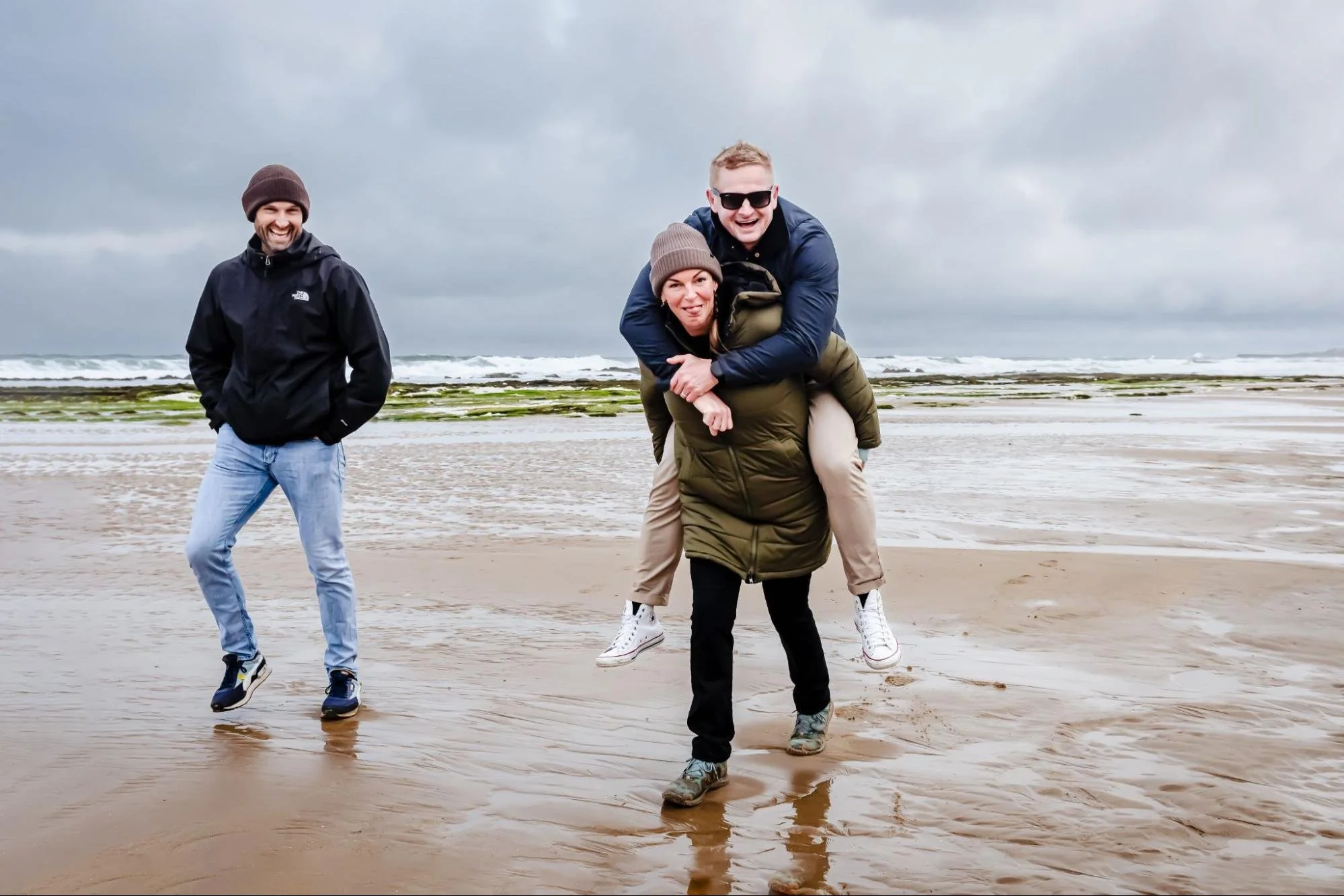
You’re 40-something. There are kids to get to school, a career that still demands your best years, and a body that quietly sends invoices for two decades of skipped workouts, late nights, and desk-bound stress. You’re not trying to live to 100. You just want to feel like yourself again - with enough energy to keep up with your kids and enough years ahead to enjoy the payoff of all this work. That’s the real question, and it splits into two related but distinct ideas: longevity and healthspan.
Two different questions
Longevity is about lifespan - the total number of years you’re alive, full stop. Healthspan is about the quality of those years: how long you stay free of chronic disease, disability, and functional decline (National Institute on Aging; Harvard Health, 2023). Put simply, lifespan is quantity, healthspan is quality.
The gap between the two is larger than most people assume. Global data show the average person now lives roughly 9.6 years in poor health before death - years marked by chronic disease, reduced mobility, or disability (World Health Organization data, cited in Harvard Health, 2023). You can add years to your life without adding life to your years. For a busy professional, that gap is the nightmare scenario: retiring with the time and money to enjoy life, but not the body to do it in.
What drives each one
Genetics account for only about 20-30% of variation in human lifespan - the remaining 70-80% comes down to modifiable factors: diet, physical activity, sleep, stress, social connection, and environment (exposome research reviewed in Nutrients, 2025). That’s the encouraging part - most of this is in your control, even at 40+.
Positive factors with strong evidence behind them include:
Cardiorespiratory fitness. A large Cleveland Clinic study of over 122,000 adults found the least-fit group had roughly five times the mortality risk of the fittest group - a stronger predictor than smoking, hypertension, or diabetes (Mandsager et al., JAMA Network Open, 2018).
Muscle strength. Grip strength - a proxy for overall muscle mass - predicts all-cause mortality independent of age; low strength is associated with more than double the mortality risk in some cohorts (Age and Ageing, 2022; PMC, 2018).
Diet quality. A 2025 cohort study of nearly 60,000 UK adults found that people with the poorest baseline habits could gain roughly four years of healthspan through modest, sustained improvements in diet quality - an extra daily serving of vegetables, whole grains, and fish (eClinicalMedicine, 2025).
Sleep. Both too little and too much sleep disrupt glucose regulation, raise inflammation, and dysregulate appetite hormones - sleep is not a luxury, it’s a metabolic lever (eClinicalMedicine, 2025).
Social connection. Strong social ties are a consistent feature of the world’s longest-lived populations, the so-called Blue Zones (Nutrients, 2025).
Negative factors are largely the mirror image:
Physical inactivity contributes to roughly one in six deaths in the UK and accelerates age-related disease (eClinicalMedicine, 2025).
Chronic loneliness and social isolation raise all-cause mortality risk by 26-35% in meta-analyses of tens of thousands of participants - a risk comparable to well-known factors like obesity (Nature Human Behaviour, 2023; Holt-Lunstad meta-analysis).
Poor diet and excess weight drive the cardiometabolic disease that eats into healthspan years before it shortens lifespan.
Chronic, unmanaged stress keeps the body in sustained inflammatory and hormonal overdrive, accelerating several of the biological “hallmarks of aging” identified by geroscience researchers, including inflammation and cellular senescence (López-Otín et al.; NIA geroscience framework).

What actually moves the needle
The research is consistent on one point that should be reassuring for anyone short on time: you don’t need a total life overhaul. The 2025 UK cohort study found that small, concurrent improvements across sleep, activity, and diet produced meaningful gains in both lifespan and healthspan — more than any single change made in isolation (eClinicalMedicine, 2025).
For healthspan specifically, prioritise:
Resistance training, 2-3x/week. Preserving muscle mass and strength after 40 is one of the best-evidenged defenses against frailty and functional decline.
Zone 2 cardio plus some higher-intensity work. Building and maintaining cardiorespiratory fitness (VO2 max) is arguably the single strongest lifestyle predictor of mortality risk in the literature (Mandsager et al., 2018).
7-8 hours of consistent sleep. Non-negotiable, not optional - treat it as a scheduled commitment the way you would a client meeting.
Protein and plant diversity. A diet built around vegetables, whole grains, fish, and adequate protein supports both metabolic health and the muscle mass you’re working to build.
For longevity and healthspan together:
Protect your relationships. Time with your partner, kids, and friends isn’t time stolen from your health goals - the evidence suggests it is a health goal.
Build stress-recovery habits. Brief daily practices - a walk, breathwork, time outdoors - blunt the chronic inflammatory load of a demanding career.
Get ahead of disease, don’t wait for symptoms. Regular check-ups and bloodwork catch the metabolic drift (blood pressure, glucose, cholesterol) that quietly erodes healthspan years before you’d notice anything is wrong.
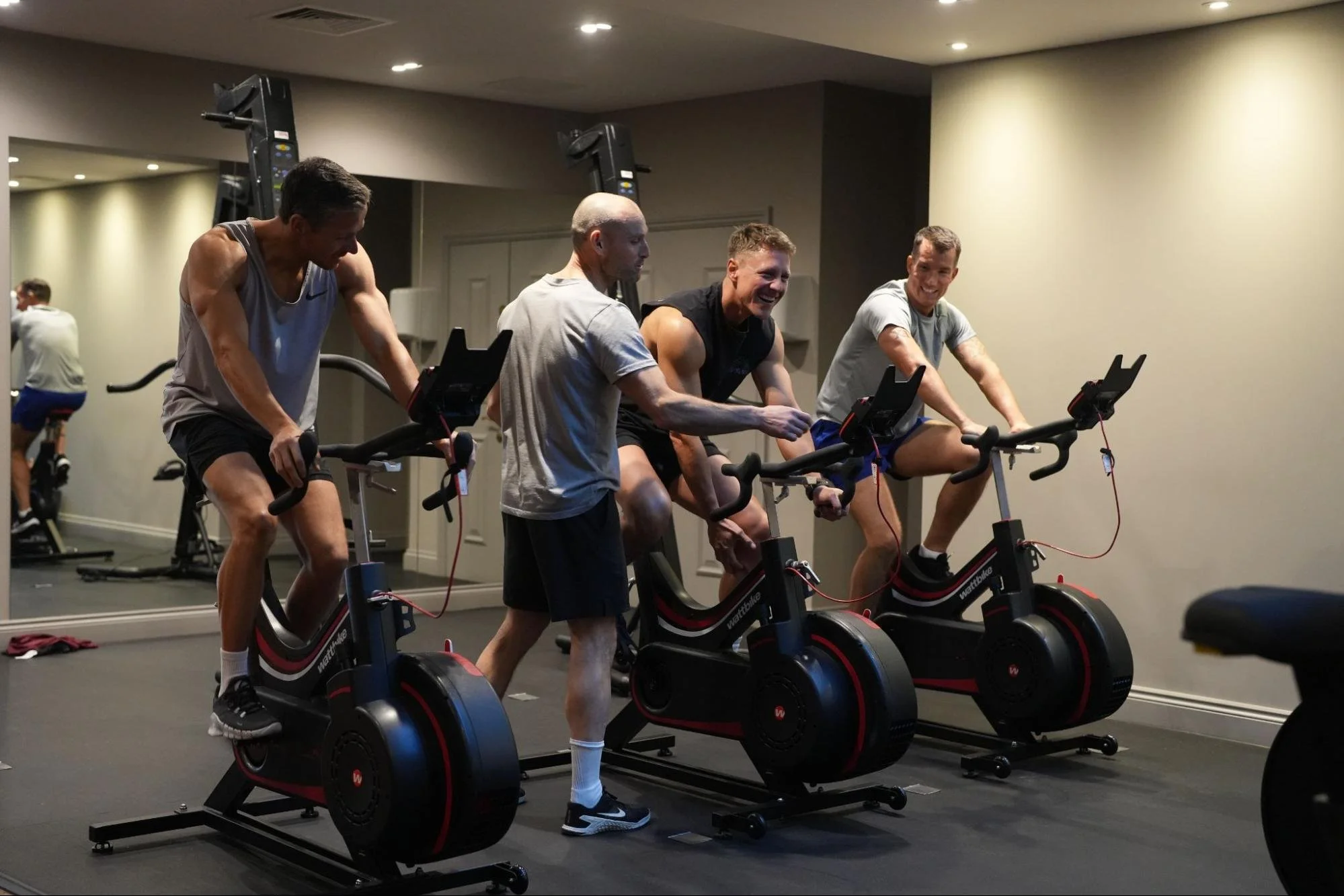
Test yourself: proxy measures for healthspan
You don’t need a lab to get a rough read on where you stand. These are simple, low-cost self-tests - some backed by large cohort studies, others useful clinical heuristics popularized by longevity physicians like Peter Attia. Worth knowing which is which.
Cohort-study validated:
Grip strength. Squeeze a hand dynamometer. Below-average grip strength independently predicts all-cause mortality across large studies (Age and Ageing, 2022).
Sit-to-rise test. Sit down on the floor and stand back up using as few hands/knees as possible (scored out of 10). One of the best-validated single tests - it captures strength, balance, and flexibility together, and low scores predict higher mortality (European Journal of Preventive Cardiology, 2025).
Single-leg balance. Stand on one leg, eyes open, for 10 seconds. Inability to do so is independently associated with higher all-cause mortality in adults over 51 (cohort study, Brazil).
Gait speed. Walking pace, especially under 0.8 m/s (about a leisurely stroll), is one of the most consistently replicated mortality predictors in older-adult research (meta-analysis, 2018).
30-second sit-to-stand. Count how many controlled reps you can do from a chair in 30 seconds - a simple, trackable proxy for lower-body strength and endurance.
Useful heuristics (less formally validated, but grounded in what they measure):
Dead hang. Hang from a pull-up bar as long as possible. Attia’s rough target: 2 minutes for a 40-year-old man, 90 seconds for a woman - a proxy for grip and shoulder/back strength.
Farmer’s carry. Carry a dumbbell in each hand (roughly half bodyweight per hand) as far as you can. Attia’s benchmark: holding your full bodyweight combined for 1 minute (good) to 2 minutes (very good) in your 40s.

Top 20 metrics used to build a “longevity score”
Longevity clinics, researchers, and tools like Peter Attia’s assessments typically draw on a mix of functional tests, vitals, blood biomarkers, and composite “biological age” scores. Some of these have decades of mortality-cohort evidence behind them; others are newer and still being validated. Here’s the fuller picture, organized by category.
Physical function (strongest, most consistent evidence)
Grip strength
Gait (walking) speed
Sit-to-rise test score
30-second sit-to-stand reps
Single-leg balance time
VO2 max / cardiorespiratory fitness
Dead hang time (heuristic)
Loaded carry capacity / farmer’s carry (heuristic)
Body composition
Waist-to-hip ratio (or waist-to-height ratio)
Visceral fat and lean mass (via DEXA scan)
BMI (widely used but the weakest of this group - doesn’t distinguish fat from muscle)
Cardiovascular and metabolic vitals
Resting heart rate
Blood pressure
Heart rate variability (HRV)
HbA1c / fasting glucose
Blood biomarkers
ApoB (or LDL-C as a fallback) - a measure of atherogenic (plaque-forming) particle count
hsCRP - a marker of systemic inflammation
Homocysteine
HDL and triglycerides
Composite biological-age scores
Epigenetic/biological age clocks (e.g., PhenoAge, GrimAge, DunedinPACE) - these estimate a “biological age” from blood or DNA methylation markers and have been shown to predict mortality independent of chronological age (PLOS Medicine, 2018), though they remain a fast-evolving research area rather than a fully standardized clinical test.
A practical way to use this list: the physical-function tests (1-8) are free, take minutes, and are worth doing today. The vitals and blood work (9-19) are what a GP visit or annual physical already covers - ask your doctor to flag them specifically. Biological-age clocks (20) are interesting but optional; treat them as directional, not diagnostic.
The bottom line
You’re not aiming for immortality. You’re aiming to still be strong, sharp, and present enough to walk your kids down the aisle, keep up on a hike, and enjoy the freedom that decades of hard work are supposed to buy you. That’s a healthspan goal as much as a longevity one - and unlike most things competing for your attention right now, the evidence says it responds to small, consistent effort rather than a dramatic overhaul.
References
National Institute on Aging. Geroscience: The intersection of basic aging biology, chronic disease, and health. nia.nih.gov/research/dab/geroscience-intersection-basic-aging-biology-chronic-disease-and-health
Harvard Health Publishing (2023). Lifespan vs. healthspan: Why how you age matters more than how long you live. health.harvard.edu/healthy-aging-and-longevity/lifespan-vs-healthspan-why-how-you-age-matters-more-than-how-long-you-live
Mayo Clinic News Network. Mayo Clinic Q and A: Lifespan vs. healthspan. newsnetwork.mayoclinic.org/discussion/mayo-clinic-q-and-a-lifespan-vs-healthspan/
Definitions of healthspan: A systematic review (2025). Ageing Research Reviews / ScienceDirect. sciencedirect.com/science/article/pii/S1568163725001527
Minimum concurrent sleep, physical activity, and nutrition variations associated with lifeSPAN and healthSPAN improvements: a population cohort study (2025). eClinicalMedicine (The Lancet). thelancet.com/journals/eclinm/article/PIIS2589-5370(25)00676-5/fulltext
The Power of Environment: A Comprehensive Review of the Exposome’s Role in Healthy Aging, Longevity, and Preventive Medicine — Lessons from Blue Zones and Cilento (2025). Nutrients, MDPI. mdpi.com/2072-6643/17/4/722
Mandsager, K., et al. (2018). Association of Cardiorespiratory Fitness With Long-Term Mortality Among Adults Undergoing Exercise Treadmill Testing. JAMA Network Open.
Kunutsor, S.K., et al. Associations of handgrip strength with all-cause and cancer mortality in older adults: a prospective cohort study in 28 countries (2022). Age and Ageing, Oxford Academic. academic.oup.com/ageing/article/51/5/afac117/6593705
Associations of Muscle Mass and Strength with All-Cause Mortality among US Older Adults (2018). PMC, National Library of Medicine. ncbi.nlm.nih.gov/pmc/articles/PMC5820209/
Holt-Lunstad, J., et al. Loneliness and Social Isolation as Risk Factors for Mortality: A Meta-Analytic Review. Perspectives on Psychological Science.
A systematic review and meta-analysis of 90 cohort studies of social isolation, loneliness and mortality (2023). Nature Human Behaviour. nature.com/articles/s41562-023-01617-6
López-Otín, C., et al. The Hallmarks of Aging — as referenced in NIA geroscience research framework, nia.nih.gov/research/dab/geroscience-intersection-basic-aging-biology-chronic-disease-and-health
Sitting-rising test scores predict natural and cardiovascular causes of deaths in middle-aged and older men and women (2025). European Journal of Preventive Cardiology, Oxford Academic. academic.oup.com/eurjpc/advance-article/doi/10.1093/eurjpc/zwaf325/8163161
Ability to sit and rise from the floor as a predictor of all-cause mortality (2012). European Journal of Preventive Cardiology, cited via PubMed. pubmed.ncbi.nlm.nih.gov/23242910/
Single-Leg Stance Test as a Reliable Indicator for All-Cause Mortality (2022 cohort study, Brazil, 1,702 adults aged 51-75). Neurology Advisor, reporting on British Journal of Sports Medicine. neurologyadvisor.com/news/single-leg-stance-test-as-a-reliable-indicator-for-all-cause-mortality/
Association Between Gait Speed With Mortality, Cardiovascular Disease and Cancer: A Systematic Review and Meta-analysis of Prospective Cohort Studies (2018). PubMed. pubmed.ncbi.nlm.nih.gov/30056008/
Heart rate variability in the prediction of mortality: A systematic review and meta-analysis of healthy and patient populations (2022, 32 studies, 38,008 participants). PubMed. pubmed.ncbi.nlm.nih.gov/36243195/
Body mass index, waist circumference and waist-hip ratio: which is the better discriminator of cardiovascular disease mortality risk? Individual-participant meta-analysis of 82,864 participants from nine cohort studies (2011). PubMed. pubmed.ncbi.nlm.nih.gov/21521449/
Excess Apolipoprotein B and Cardiovascular Risk in Women and Men (2024). JACC. jacc.org/doi/10.1016/j.jacc.2024.03.423
Levine, M., et al. An epigenetic biomarker of aging for lifespan and healthspan / A new aging measure captures morbidity and mortality risk across diverse subpopulations from NHANES IV (2018). PLOS Medicine. journals.plos.org/plosmedicine/article?id=10.1371/journal.pmed.1002718
Resting heart rate and all-cause and cardiovascular mortality in the general population: a meta-analysis (2016). CMAJ. cmaj.ca/content/188/3/E53
Attia, P. Dead Hang, Air Squat, VO2 Max, & Farmer’s Carry Metrics for Longevity. PodClips (summary of Peter Attia MD content). podclips.com/c/dead-hang-air-squat-vo2-max-farmers-carry-metrics-for-longevity — heuristic benchmarks from clinical practice, not peer-reviewed cutoffs.